How do I help my child with GCSE English?
It’s September. Your teen has now started their English GCSEs.
For some parents, this transition is hard — often even more so if their child’s English studies are very different to how they studied English (perhaps as a second language).
Or maybe you specialised in Science and Maths, and English’s essay writing demands feel completely foreign.
But there are absolutely simple ways in which you can help your child through this new academic challenge.
Read below for parent-specific tips.
Understand the basics
Know that your teen has 2 English GCSEs.
Their first English GCSE is English Literature.
Students are tasked with writing essays analysing how certain poems, plays and novels explore ideas about society.
Students often find English Literature hard because it is content and concept heavy. Many schools spend most of their English lessons preparing students for English Literature — there’s a lot to get through.
English Literature exams are some of the first ones your child will sit in Year 11 (mid May).
The second English GCSE is English Language.
50% of English Language marks are available for some form of extended writing (eg. letter, article, and story writing). The rest of the marks come from questions on unseen passages of fiction and non-fiction, given to students for the first time in the exam itself.
Students find English Language hard because performance depends on on-the-spot comprehension, analysis, and writing (with good grammar): it’s a skills based subject.
English Language exams are usually held in the middle to the end of GCSE exam season (late May to mid June).
Know your teen’s English Literature set texts.
Almost every GCSE English Literature student will study 4 set texts, picked by their teacher. It’s helpful to know these texts in advance, so find them out as soon as you can. Almost all students study:
1 Shakespeare text (like Macbeth or Romeo and Juliet)
1 novel from the 1800s (like Jekyll and Hyde or Christmas Carol)
A text from the 1900s or after (like An Inspector Calls or Lord of the Flies)
A collection poetry (sometimes on a certain theme, like Conflict or Love). Usually there are 15 poems to know.
You can help your child by encouraging them to become familiar with their set texts even before they’re studied in school. For instance, by reading the text fully in the summer holidays, or engaging with an adaptation first if accessible, like a film, movie, or even a comic book adaptation. There are some great manga versions of Shakespeare!
Know your teen’s exam board.
This is very important because it affects how your child will be assessed and marked. GCSEs differ from Key Stage 3 work because now your teen follows an exam board’s curriculum. It is not just their school that determines the course of work any more.
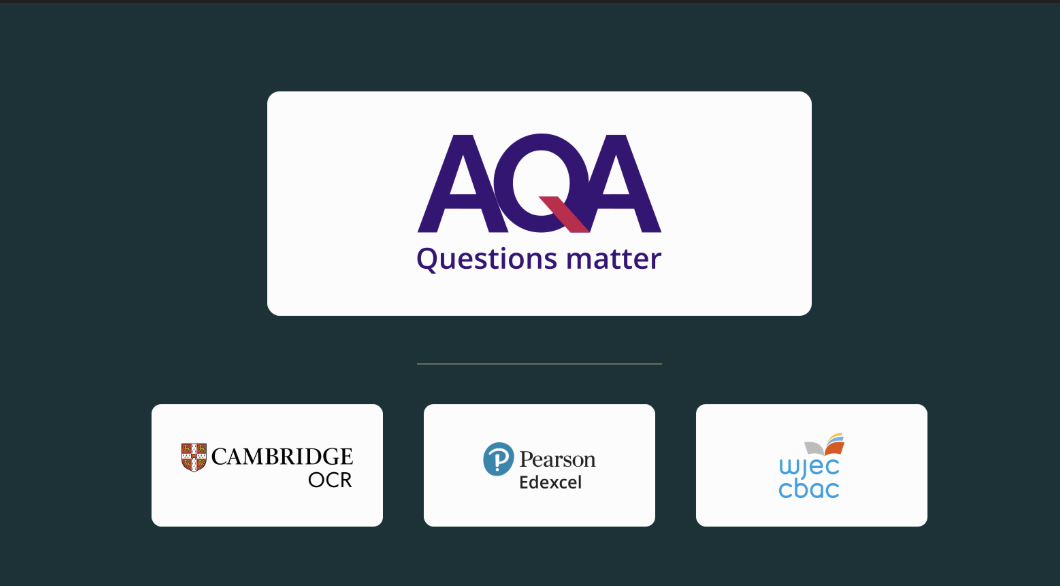
For most students, their English exam board will be AQA. However, other boards are also studied like Edexcel, OCR and WJEC Eduqas. If your child attends an independent school, they might be doing an IGCSE board instead— almost always one of Cambridge or Edexcel IGCSE.
Most exam boards look for similar things, but examiner preferences can subtly vary by board. Look at examiner reports specific to your child’s board to get a sense of what their examiners in particular are looking for.
Understand how GCSE grading works
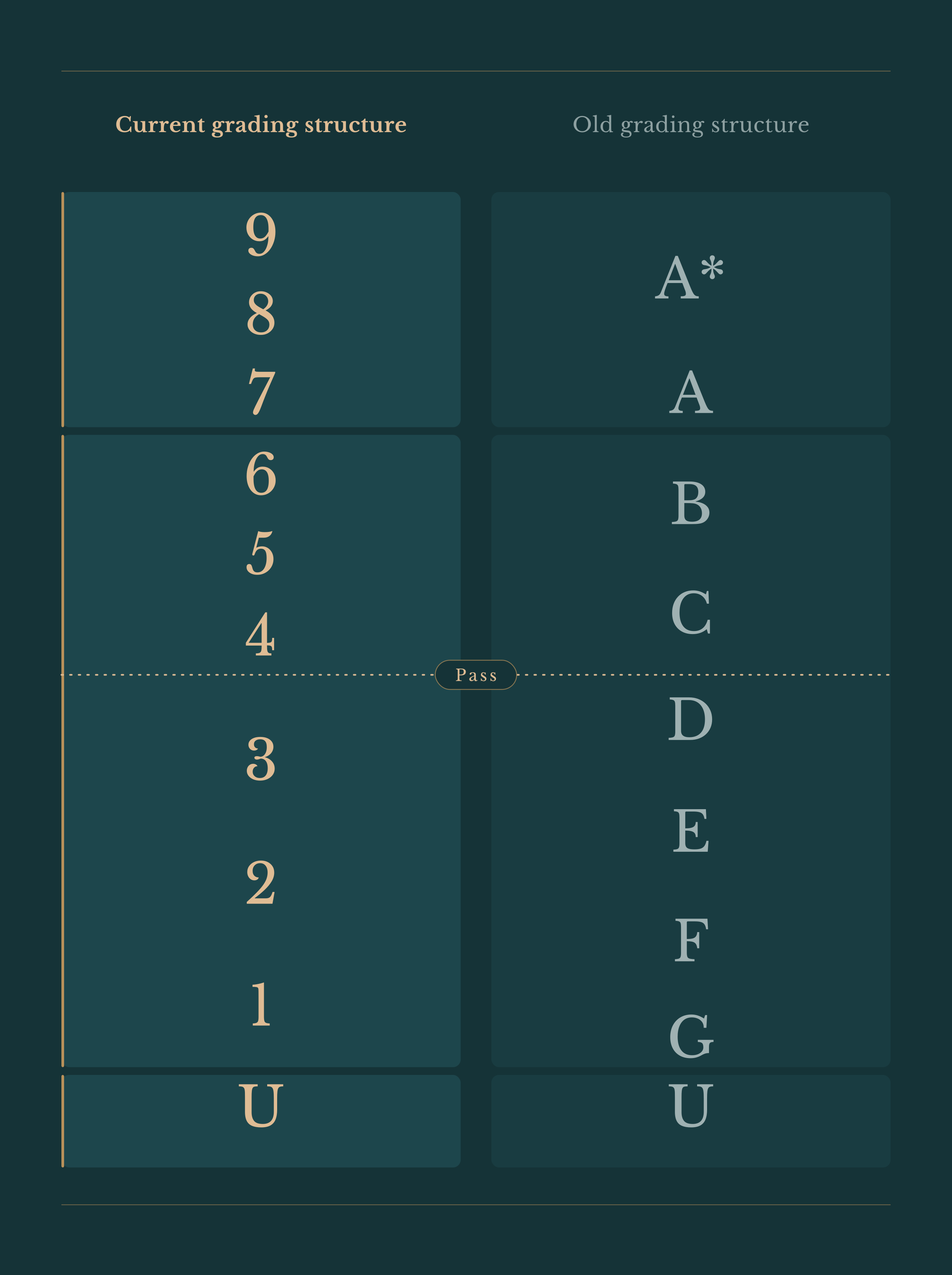
Your teen will receive a grade from Grade 1 (lowest) to Grade 9 (highest). As English Language and English Literature are 2 separate GCSEs, your child will receive a separate grade for each on their results sheet. A grade 4 is needed to pass a GCSE. See a table converting the 1-9 to the old A* to G system at the bottom of this blog.
Start by looking at final exams
With exams, it’s often tactical to start with the end goal. So once you know your child’s set texts and exam board, look at past papers to understand your teen’s question papers’ structures.
For English Literature, I like to record all past paper questions from previous years. This gives students a list of themes to look for in their text while they read it in school. They can also start to see similarities between previous questions, and figure out which ideas are most versatile. I have my students ask themselves ‘how can I apply the same knowledge to lots of different past paper questions?’
It can be incredibly helpful to look at high scoring essays, marked by your child’s board, to unpick why they did well. Your child can then practice applying those principles in their own writing. These are often tricky to find online (especially for more rarely studied boards), but your child’s school teachers should have access to some. Email and ask if you can see some exemplar student responses.
Use free internet resources
An advantage of following an exam board’s curriculum rather than a curriculum set by a single school is that there’s many students studying exactly what your child is.
The internet is packed with resources that can support their learning. YouTube is especially brilliant for this: you can find entire lecture series dedicated to a certain topic, question or text. For AQA (the most popular English board in the country), Mr Bruff is a good place to start, while Mr Salles’ channel is great for getting a deeper look at things.
These videos are a great starting off point for your child to expose themselves to new and helpful ideas, but keep in mind that:
Examiners and teachers have heard ideas from the biggest channels a number of times — try to find a more unique spin on things if you can. Be especially careful of copying a creative writing story from a content creator online: examiner reports have mentioned this as a problem that’s easily spotted.
Try and follow creator’s specific to your child’s board. There are channels made for less commonly studied boards like Edexcel or Cambridge IGCSE (Taughtly is great for Cambridge), you just need to look a bit harder.
For older texts (like Shakespeare and novels from the 1800s), use Project Gutenberg to find online, free PDFs. Online versions make searching for quotes a breeze: press Ctrl + F to find certain words in your set texts.
Encourage your teen to practice regularly
Even a paragraph or 2 per week on top of school work is enough. To start with, they can have their notes with them, but eventually move to writing with a time limit and no notes to mimic exam conditions.
Practicing writing in time pressure is important: the time pressure of English exams can be brutal. Your child needs to train the muscles in their hand to become faster at writing, and so they can learn how to think and write simultaneously.
There’s a lot that can be achieved with tactics and good guidance, but for GCSE (as with most important tasks), hard work is irreplaceable.
Use AI — but in a way that’s actually helpful
AI has undeniably changed education. But if your teen uses it, ensure they’re using it in a way that helps them. Here’s what NOT to do with AI:
Don’t let your teen use AI to write for them. This is the biggest way they can shoot themselves in the foot come exam time. Your child needs to practice writing for an exam where they’ll have no access to AI. Even if they use AI in the future to do writing, for example at work, they’ll need to develop a taste for what good writing is to direct the AI properly.
Don’t rely solely on AI to mark your child’s work. I’ve experimented with this, and have found some inaccuracies: AI often will give better marks to the essay with better ideas, but this isn’t always what scores well on GCSE mark schemes that have quite precise requirements. See if a teacher can mark their essay instead.
Don’t let your child go to AI for all their ideas on a literary set text. At GCSE, students approach set texts in quite a particular way that AI can diverge from. AI also might phrase these ideas in a way that’s inaccessible.
Here are some better ways your teen can use AI.
Do encourage your child to have conversations with AI if a certain concept doesn’t make sense. They can tell AI what the concept is, and converse with it until they’ve understood the topic thoroughly.
Do go to AI with specific requests from school work like ‘I don’t understand what effect the enjambment has in this line of poetry’ or ‘how do I stop writing about Mr Birling like a real person and instead relate him to Priestley’s message?’
Do use AI to ‘translate’ passages of writing that are dense or which your child struggles to understand This is especially helpful for Shakespeare: understanding the literal meaning of a passage first can help them analyse it later.
Consider hiring a private tutor
If you’d like support, consider hiring a private GCSE English tutor. Private tutors can help with everything above and more.
GCSE students who work with me benefit from:
Regularly set homework to ensure they’re practicing writing independently — just like they’ll need to in exams.
Exposure to outstanding, original ideas they can use to stand out to examiners.
The chance to speak through every complicated concept with an Oxford educated subject expert.
Marking that identifies where their work needs improvement, with advice and methods custom to their learning style.
Board specific advice (especially for AQA) to ensure exam preparation is tactical.
If you’d like to book 1-to-1 tutoring with me, get in touch to discuss availability.