Richard II: Sample A* Essay
A sample A* A-Level essay on Shakespeare’s washing imagery in Richard II (1595).
Relevant for AQA B and OCR A-Level English Literature students.
Get in touch if you’d like 1-to-1 A-Level English Literature support.
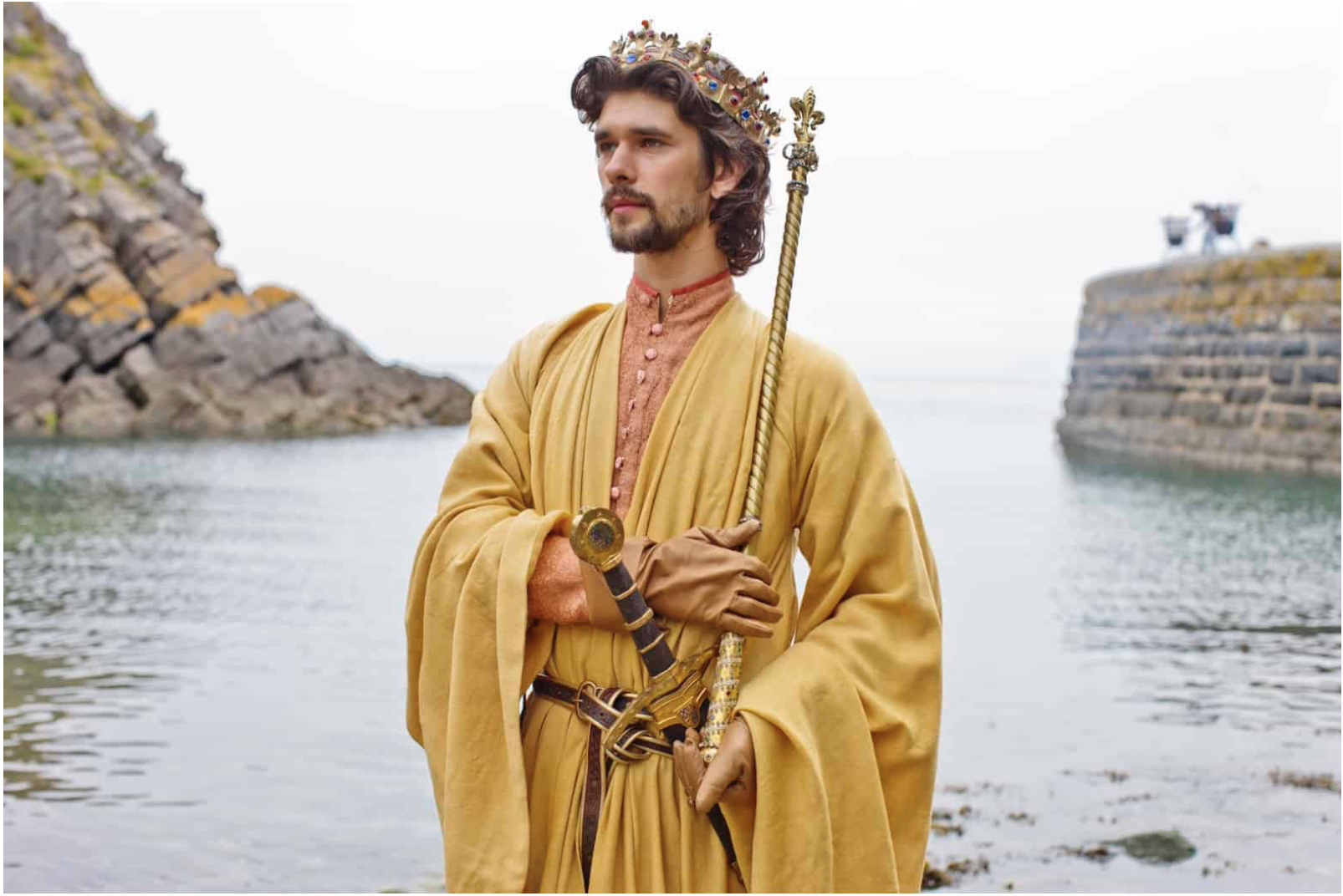
From the BBC’s television adaption of Richard II, The Hollow Crown (2012), starring Ben Wishaw
Usurpation, Repentance and Washing Imagery in Richard II
The importance of water imagery in Richard II (c. 1595) has been well established as mirroring the play’s dramatic and political action (Harris, 1970: 162), and images of buckets and tears have received particular attention (Halpern, 2009; Howard, 2016). There is a dearth of scholarship, however, focusing on washing imagery in Richard II. This omission is surprising given that the play has the most instances of the word ‘wash’ and its variants in Shakespeare’s canon (Open Source Shakespeare Concordance). An examination of the play’s washing imagery reveals its implicit connection with contemporary theological ideas about baptism and the related ideas of anointment and contrition. I argue that doubts about whether the king’s balm can be washed away, as well as whether Bolingbroke can truly repent and so wash Richard’s blood from his hands, contributes to what Emma Smith has identified as the play’s ‘great unanswered question’: whether Bolingbroke’s usurpation of Richard was justified (2020: 53).
Richard initially uses washing imagery to suggest his sovereignty cannot be threatened by anything earthly. His faith that his divinely elected status will protect him from ‘worldly men’ (3.2.56) (Bolingbroke’s army) is expressed as the inability to wash away the holy oil that anointed him: ‘not all the water in the rough rude sea / Can wash the balm off from an anointed king’ (3.2.55), influenced by Holinshed’s detailed description of the anointment ceremony at Richard’s coronation: ‘The archbishop… anointed his hands, then his head, then his breast, shoulders and ionts of his armes’ (1577:713). This shows that Richard feels that his spiritual status, traditionally confirmed by the application of holy oil during a monarch’s coronation on their arms, chest and head, makes him invulnerable. This is figured by the alliterative ‘rough rude sea’ in this image: it simultaneously refers to any force of nature and Bolingbroke’s forces who are evoked with the adjectives ‘rough and rude’, suggesting Richard’s perception of the rebels as unruly. At this point in the play, therefore, Richard believes no amount of earthly violence can threaten his kingship. However, Richard’s confidence does not last long. Upon hearing the Welshmen have deserted him and his friends have died, Richard’s faith in the inviolability of kingship melts. The anointed head itself becomes the ‘mortal temples of a king’ (3.2.161) and he comes to emphasise ‘flesh and blood’ (3.2.171): the body natural rather than the immortal body politic (Ernst Kantorowicz, 1957). In the BBC’s television adaptation, Richard (Ben Whishaw) writes his signature in the sand, only for it to be effaced by the waves at the scene’s end (The Hollow Crown, 2012). The shot evokes the fact that Richard’s identity is not permanent but susceptible to the physical force of Bolingbroke’s army, once again symbolised by the washing power of the ‘rough rude sea’.
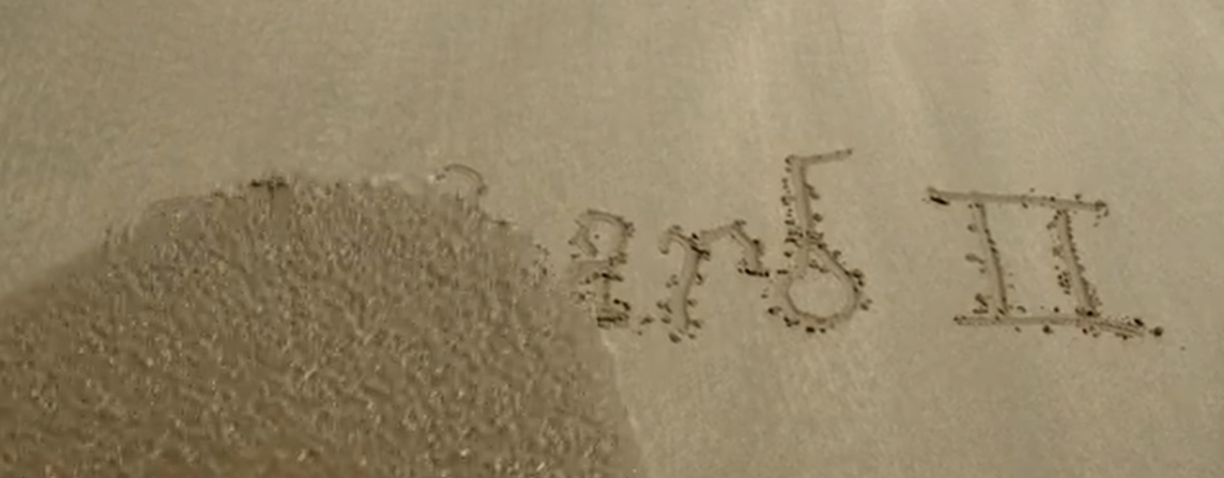
From The Hollow Crown (2012)
The Hollow Crown’s image of Richard’s name being washed away also presages his claim that Bolingbroke’s usurpation has not only stripped him of his title as king but his name as well: ‘that name was given me at the font... tis usurp’d’ (4.1.256-7). Richard’s conflation of his coronation with baptism, enacted by the anaphoric structure of ‘no name, no title’ (4.1.255), is not entirely unfounded. Both ceremonies involve placing liquid on the head, making the sign of the cross, and, crucially, an evocation of the Holy Spirit. Anointment is therefore a kind of ‘new baptism’ (Swift, 2013: 225). This leads Robert M. Schuller to conclude that the deposition is an ‘inversion in baptismal rites’ (2004: 158). Baptism, however, cannot be undone: the 1559 Book of Common Prayer states that in baptism the child is ‘wash’[ed] with ‘thy holy gost’ and received into ‘the Arke of Christes churche’ (142). This is even more relevant for Richard, historically a Catholic king, since the Holy Spirit was meant to have left an indelible mark. Richard evidently, then, does not consider ceremonies as merely symbolic. His calling upon the ‘stinging nettles’ and ‘adder’ to attack his enemies, as well as telling his lords to ‘mock not’ his ‘conjuration’ (3.2.17-23) implies he feels his anointment has an almost magical power to protect him. His belief in the mystical power of his kingship is so strong that, shortly after claiming that his balm cannot be washed, he claims that God will protect ‘His Richard’ and send ‘a glorious Angel’ (3.2.60-61) to fight the rebels. Richard is therefore only being hyperbolic when he states his name has been usurped. The conflation of anointment and baptism means Richard feels that, like baptism, coronation has not and cannot be undone. It is telling that Richard claims Exton that he has split ‘the king's blood’ in his final lines(5.5.110), suggesting that he continues to think of himself as a monarch.
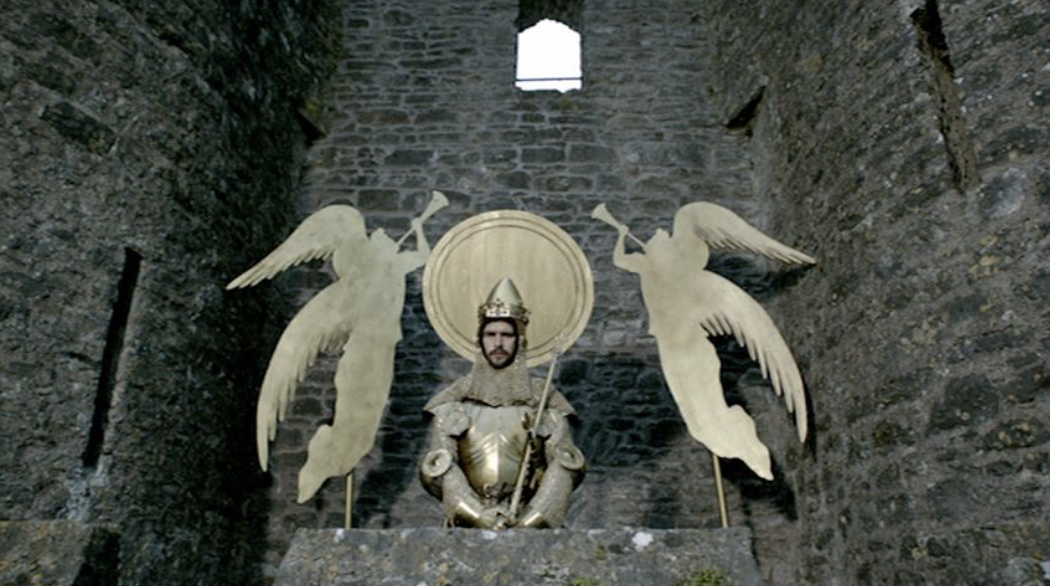
From The Hollow Crown (2012)
In contrast, Act 4’s deposition shows that the rebels place less importance on whether or not a king’s balm can be washed away, suggesting that, like many Protestants in Shakespeare’s day, they consider ‘the oil… but a ceremony’ (Cranmer, 1547: 126 ). For the rebels, the physical fact of Richard’s deposition matters more than his spiritual status as king: importantly, they do not mention his balm at all in this scene. It is Richard who is concerned about his balm, and he invents a deposition ritual in which he uses the power conferred to him by his anointment to remove this power: ‘with mine own tears I wash away my balm’ (4.1.207). The monosyllabic regularity of this performative abdication creates the sense of official ceremony. In Richard's logic, he is the only one who can uncrown himself, using his divinely conferred authority to remove that power. However, this results in a contradiction as his ability to wash away the balm is removed in the very act of doing so. The washing references thus raise doubts about whether earthly forces, like Bolingbroke’s army, can annul the king’s divine authority, even if he can be deposed by military force. York demonstrates this doubt even after he says he is ‘sworn’ to Bolingbroke, reporting regretfully of the ‘dust’ thrown on Richard’s ‘sacred head’ (5.2.30-9), or the very place where oil is applied and the sign of the cross is made during anointment. Even as York accepts the change in power, his language reveals the anxiety that there might still be something ‘sacred’ about Richard’s anointed head. Nor does the question of legitimacy end with this play, as the same doubt reappears later in the tetralogy where the titular character of Henry V (c. 1600) prays for God to not think ‘upon the fault my father made in compassing the crown’ (4.1.281-2). The question about the washability of Richard’s balm therefore also raises questions about whether the sin of usurpation and murder can be washed away.
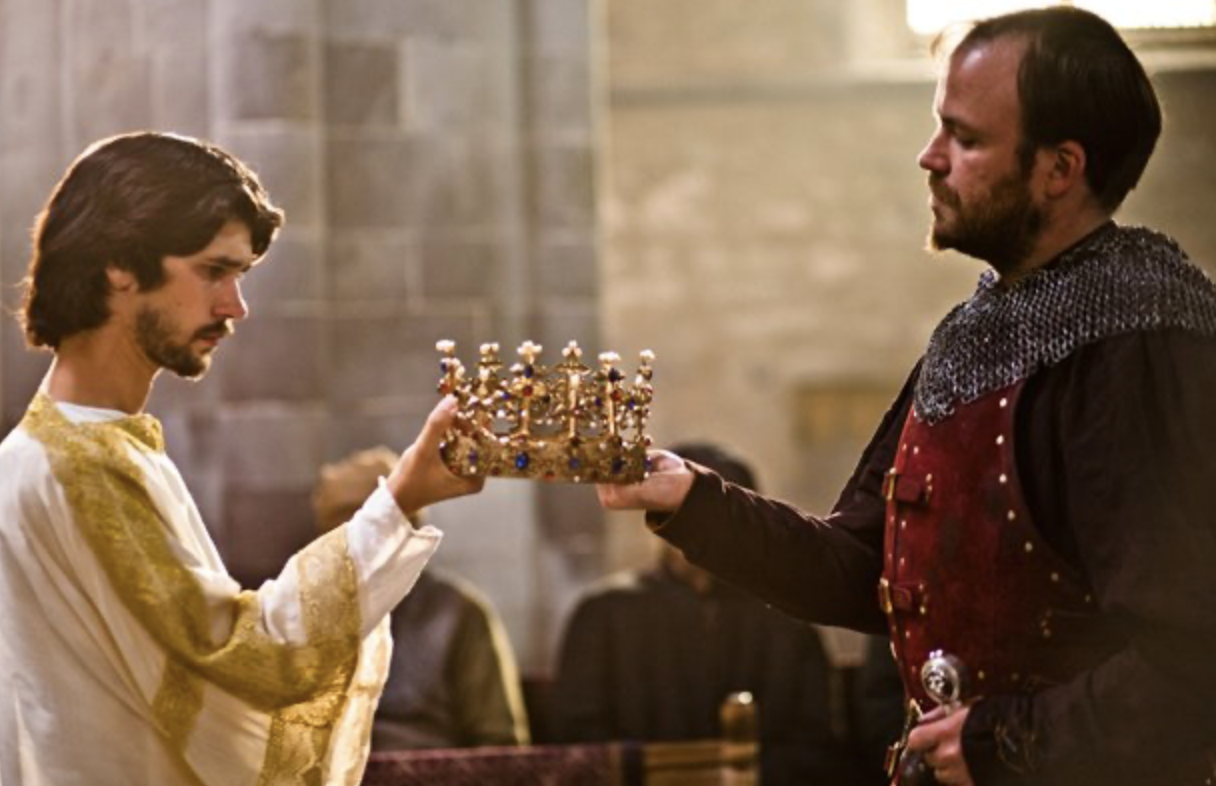
The deposition scene from The Hollow Crown (2012), starring Ben Wishaw as Richard and Roy Kinnear as Henry Bolingbroke
While York claims that ‘heaven’ had a ‘hand’ in his ascent (5.2.37), and the play does not condemn him outrightly, Bolingbroke’s use of washing imagery casts doubts on the justness of his actions. Early in the play, Bolingbroke considers culpability as something that can be cleared by offering justifications. When executing Bushy and Green, he tells them ‘to wash your blood / From off my hands here in the view of men / I will unfold some causes of your deaths’ (3.1.5-7). In using the word ‘causes’, Bolingbroke suggests that Bushy and Green are responsible for their own deaths, distancing himself from the responsibility even though he is the one who has directly sentenced them. However, a closer examination of the language reveals that he does think that their blood is on his hands, since he feels the need to ‘wash’ their blood off.
It is notable that Bolingbroke, in saying he will wash his ‘hands in the view of men’, unconsciously echoes Pilate, who also ‘washed his hands before the multitude’ and claimed that he was ‘innocent’ (Geneva Bible, Matt. 27:24). Pilate’s handwashing was commonly understood as a superficial avoidance of responsibility for Jesus’ death unaccompanied by inner contrition: he had only ‘vvashed his handes’ and not his ‘hart’ (Henry Smith, 1589: image 15). The image is popularly referenced in early modern literature, such as in The Faerie Queene (1590) where Spenser imagines Pilate in Hell eternally washing hands only for them to seem ‘fowler… to the eye’: his ‘filthy feculent’ (2.7.61.4-8) hands reveal he remains inwardly defiled. This lack of inner contrition is precisely what Richard criticizes in Bolingbroke and his followers when he calls them ‘Pilates’ (4.1.240) who only ‘show an outward pity’, so that ‘water cannot wash away’ their ‘sin’ (4.1.242). In early modern baptismal theology, water was just water without contrition, not a symbol of the saving grace of Christ’s blood ‘one drop’ (5.2.71) of which would save the soul of Marlowe’s Faustus (Doctor Faustus, 1588). Genuine contrition is required to metaphorically imbue water with the salvific power of Christ’s sacrifice, an idea expressed in Sidney’s Arcadia (c. 1593) where Philanax tells Gynecia to ‘wash your wickedness with repentance’ (4.5-11) (my emphasis). Unlike Lady Macbeth , who initially thinks ‘a little water clears’ them ‘of this deed’ (2.2.268) (Macbeth, 1606)by washing the literal blood off her hands, metaphorical blood cannot be washed away by physical water. The imagery of the play therefore suggests that Bolingbroke’s understanding of washing fails to consider both the spiritual aspect of Richard’s balm and also his own sins, putting his usurpation of Richard into question.
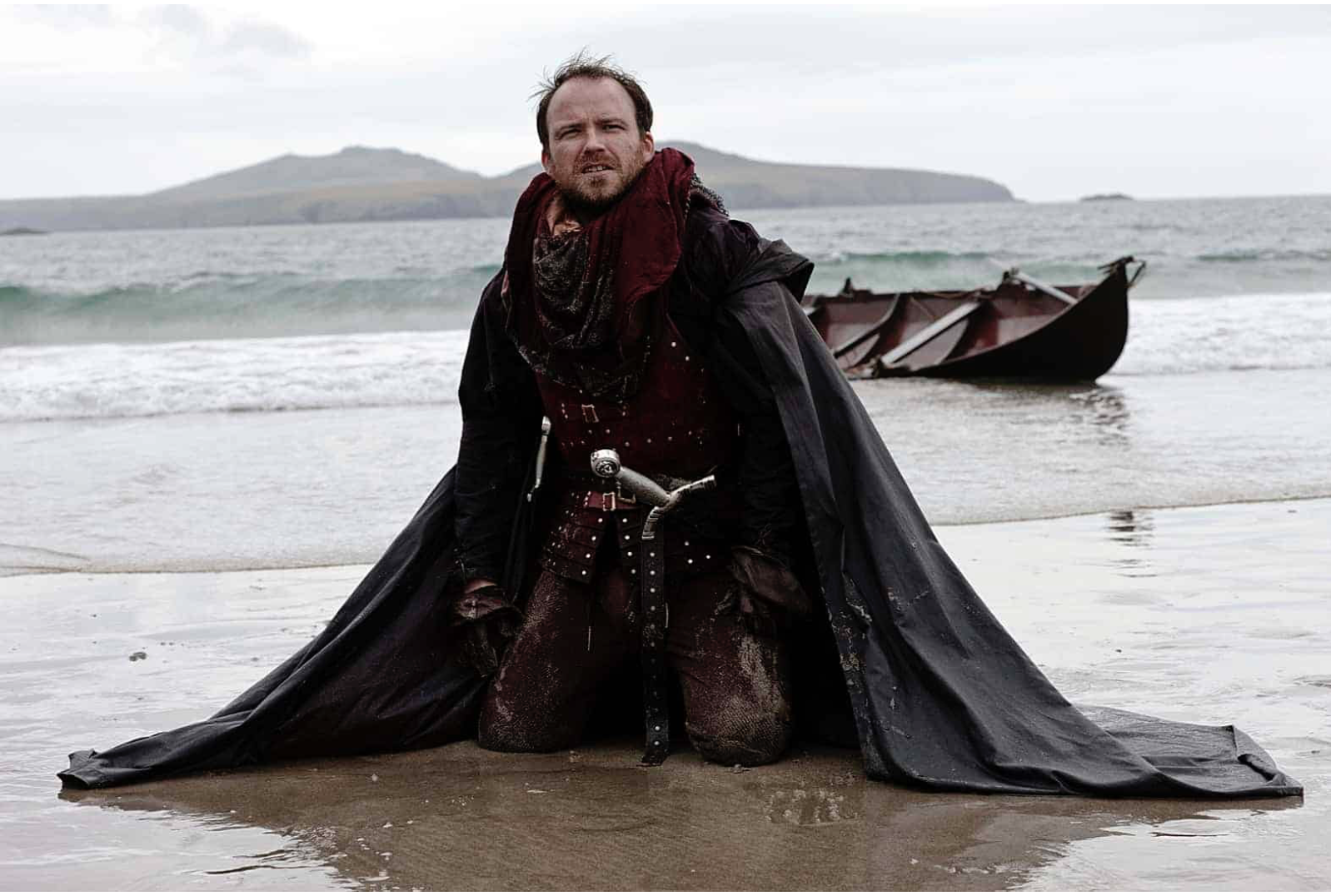
The Hollow Crown (2012), starring Roy Kinnear as Henry Bolingbroke
In contrast to this earlier sense that he could wash off the blood of Bushy and Green by explaining himself, Bolingbroke is more torn by the end of Richard II. In the play’s closing lines he promises to ‘make a voyage to the Holy Land, / To wash this blood off from my guilty hand’. The stress of the line falls on ‘blood’ and ‘guilty’ highlighting the fact that Bolingbroke recognises that water will not be enough to clear him of Richard’s death. However, it is hard to judge whether he is truly repentant. Unlike Claudius in Hamlet (c. 1603) who knows that he cannot truly repent while keeping the ‘effects for which I did the murder / My crown’ (3.3.54-5), Bolingbroke wishes to be forgiven by taking symbolic, and crucially Catholic, outward action in seeking salvation through pilgrimage rather than inner repentance. Without inner grace there is not ‘rain enough in the sweet heavens/ To wash’ his hands ‘white as snow’ (Psalm 51:7). Bolingbroke’s rhyming couplets throughout the last scene of Richard II shows a desperate desire for closure, but the rest of the tetralogy makes clear that a good political move is not necessarily spiritually justified. After a tumultuous and war-torn reign, he dies in the ironically named Jerusalem chamber (4.3.366-7) in Henry IV Part 2 (c. 1599-1600 ), never having accomplished the pilgrimage he intended, never having taken even symbolic action to show his repentance.
Washing imagery in the play reveals that there is no mystical power in the physical ceremony of baptism or anointment. Unaccompanied by less symbolic means of power, unction cannot ensure a king’s authority any more than baptism can wash away a person’s sin without repentance. However, the fact that unction does not have any miraculous power does not resolve the question of the justness of Richard’s deposition and murder. Just as unction will not help Richard retain the throne, pilgrimage will not ensure Bolingbroke’s contrition — water cannot wash away his sin, for he does not properly repent. Although Richard presents himself as a Christ figure, Richard’s blood only has the power to stain Bolingbroke with guilt, not cleanse his sins, and his lack of repentance means he cannot call on Christ’s blood to wash it away.