Wells’ Intentions in The War of the Worlds
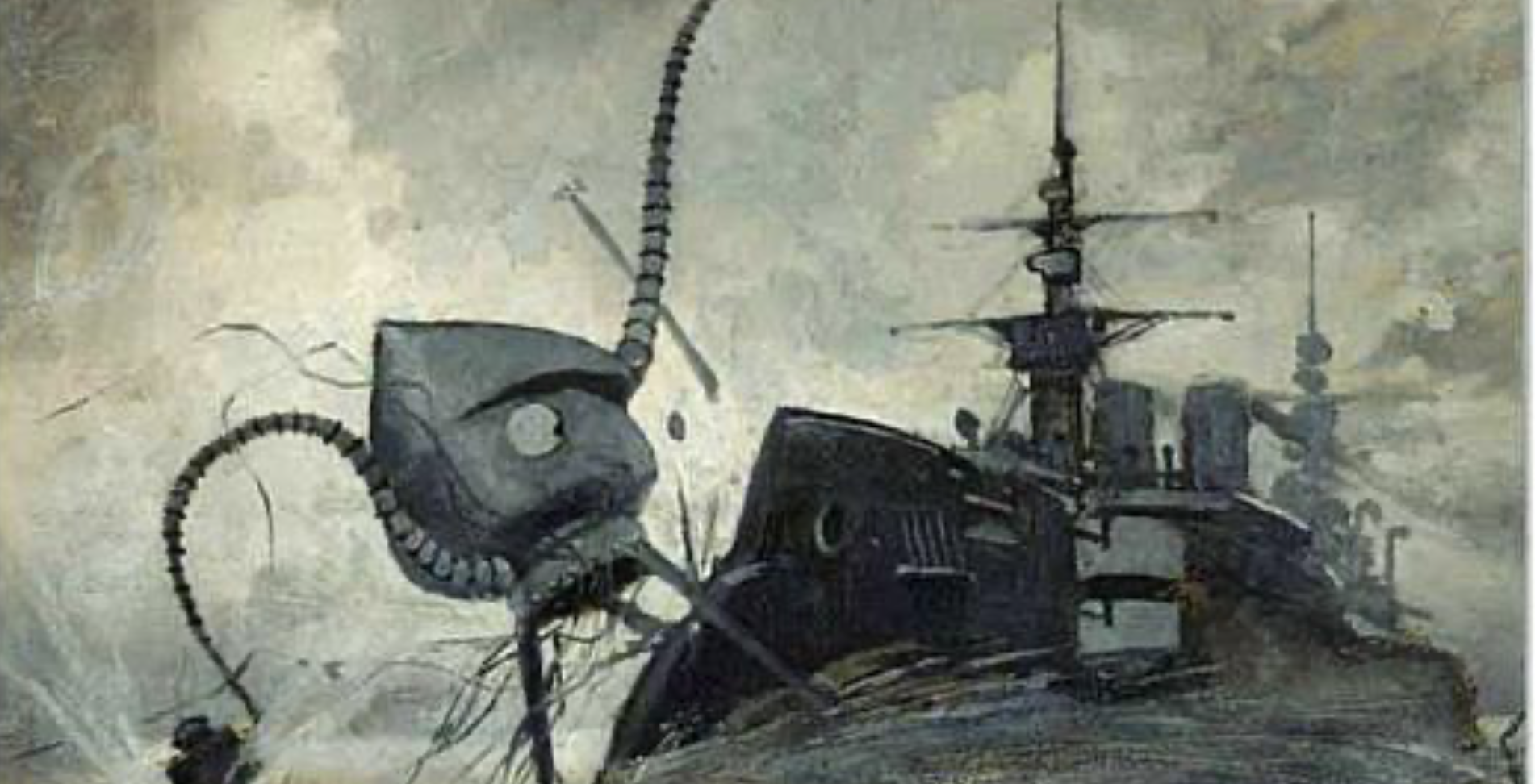
The warship HMS Thunder Child confronts a Martian fighting machine (Henrique Alvim Corrêa 1906)
Understanding a writer’s intentions is a crucial part of reaching the top bands for English Literature.
Here’s a quick but dense overview considering Wells’ intentions in The War of the Worlds (1898).
Weave them into your paragraph’s topic sentences/points to ensure you keep a firm focus on Wells’ purpose and consider how his social-historical context shaped his novel.
Relevant for OCR GCSE English and Edexcel A-Level English Literature students.
Turn his readers into futurists: would the 20th century bring growth or disaster?
Wells’ 1902 ‘The Discovery of the Future’, delivered to the Royal Institution, distinguished between futurists and those whose minds are only on the present.
His novel, with its potent warnings about technological advancements, foreign invasions, and religion’s collapse, encourages his reader to turn their minds to the future for the betterment of society. This futurist thinking is at the heart of the science fiction genre.
For more on this, consider the novel’s opening where mankind is described in blissful ignorance while trouble stirs afar: ‘with infinite complacency men went to and fro over this globe about their little affairs, serene in their assurance of their empire over matter’ (Book 1, Chapter 1).
Wells was keen to encourage his society to not be sitting ducks, and instead take the future into their own hands to avoid oncoming disaster.
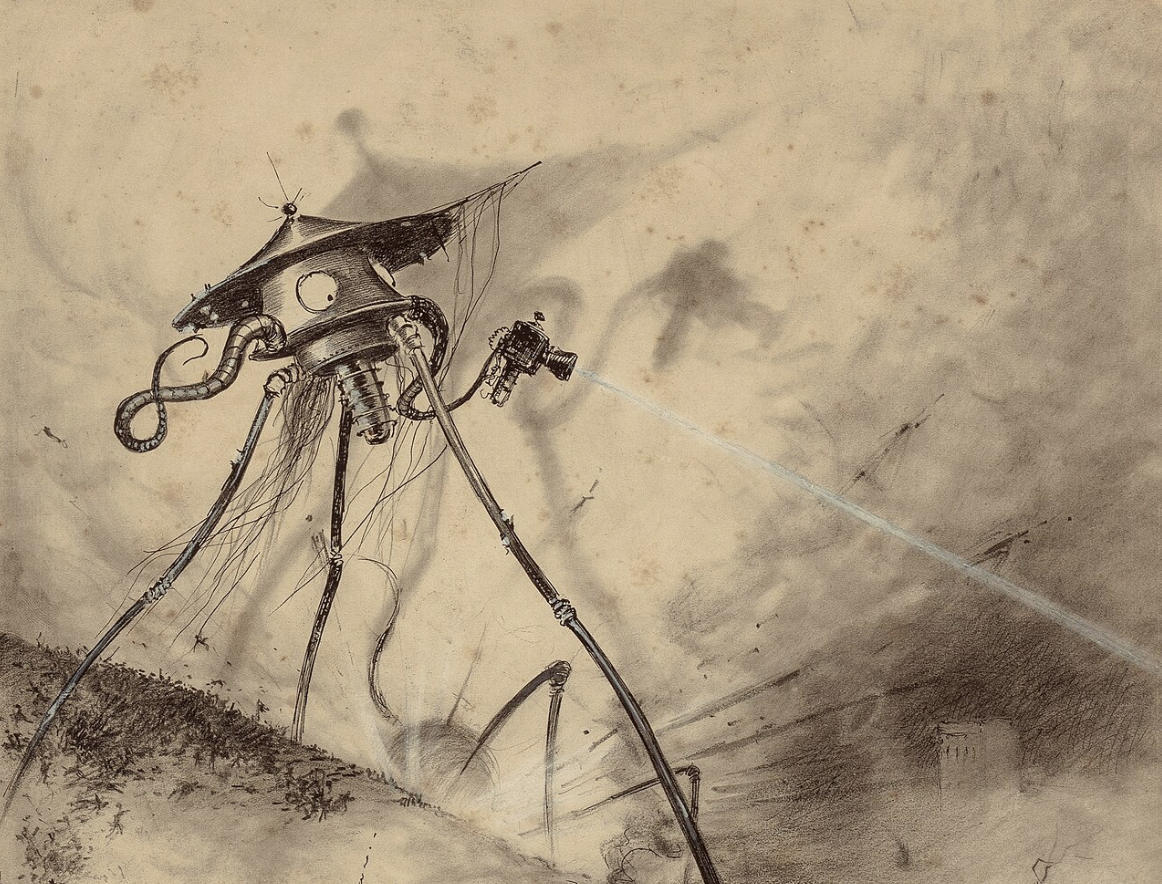
Martians discharging Heat-Rays in the Thames Valley, illustration by Henrique Alvim Corrêa for the 1906 edition.
Criticise Victorian British imperialist arrogance
Those of you who’ve read Percy Bysshe Shelley’s poem ‘Ozymandias’ (1818) will know that 19th century writers reflected on the idea that all empires — no matter how powerful they seem in the moment — inevitably collapse.
Just look at the historic structures littered across Britain and you’ll see how many powers have come and gone: pagan monuments, Roman bathhouses, and Norman castles.
The War of the Worlds’ entire premise, where England (at that time the world’s strongest country) comes under attack from a much more advanced foreign power, imagines if the next superpower to fall might be the British Empire. Any Brits who thought as far into the future as Wells did would know their empire simply couldn’t last forever — something proven as the Empire broke apart in the 20th century. Power always shifts.
Wells also seems to show some sympathy for colonised people. The novel explicitly saying that before judging the Martians, his reader should consider how ‘European immigrants’ waged a ‘war of extermination’ against ‘the Tasmians’ and other ‘inferior races’ so they were wiped out like the ‘bison and the dodo’ (Book 1, Chapter 1).
While Wells’ view of the British Empire were certainly not perfect (as his comment about ‘inferior races’ may tell you), he was still ahead of many people of his time by showing sympathy for those hurt by colonialism, and understood there was nothing inherently special about the British that would prevent them from being wiped out by a stronger power.
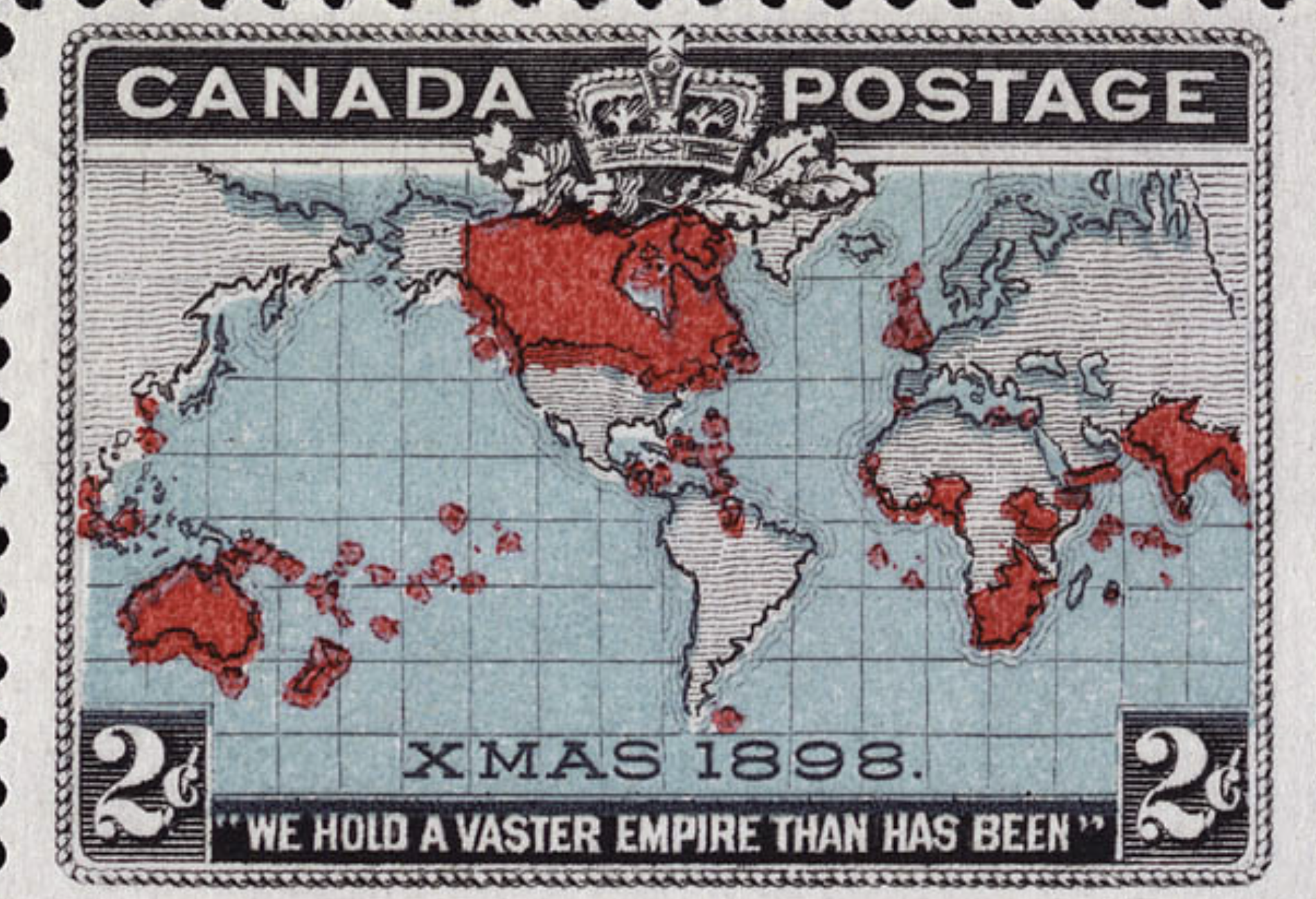
A Canadian postage stamp showing the British Empire at the time of the novel's publication, the bottom of it saying ‘we hold a vaster empire than has been’
Clarify ‘survival of the fittest’: adaptation, not strength
People often mistake Darwin’s claim that the ‘fittest’ survive to mean it is the strongest species that will dominate, the one with the most brute strength.
Certainly, for the majority of Wells’ novel, this seems to be the case, as the Martians wreck city after city.
But the novel’s end makes it clear that what really matters about Darwin’s observation is not power, but adaptation to one’s environment. It is the species that most advantageously fits into its environment that will thrive.
The Martians, despite their vastly superior technology, fall not because they’re weak, but simply as their bodies are not adapted to the Earth’s pathogens. In the end, it is these tiny organisms that save humanity — another world (though a microscopic one) whose presence, like the aliens, is forgotten by humanity.
However powerful a civilisation may be, it cannot survive in an inhospitable environment. Environment trumps all (exactly why the Martians left Mars in the first place).
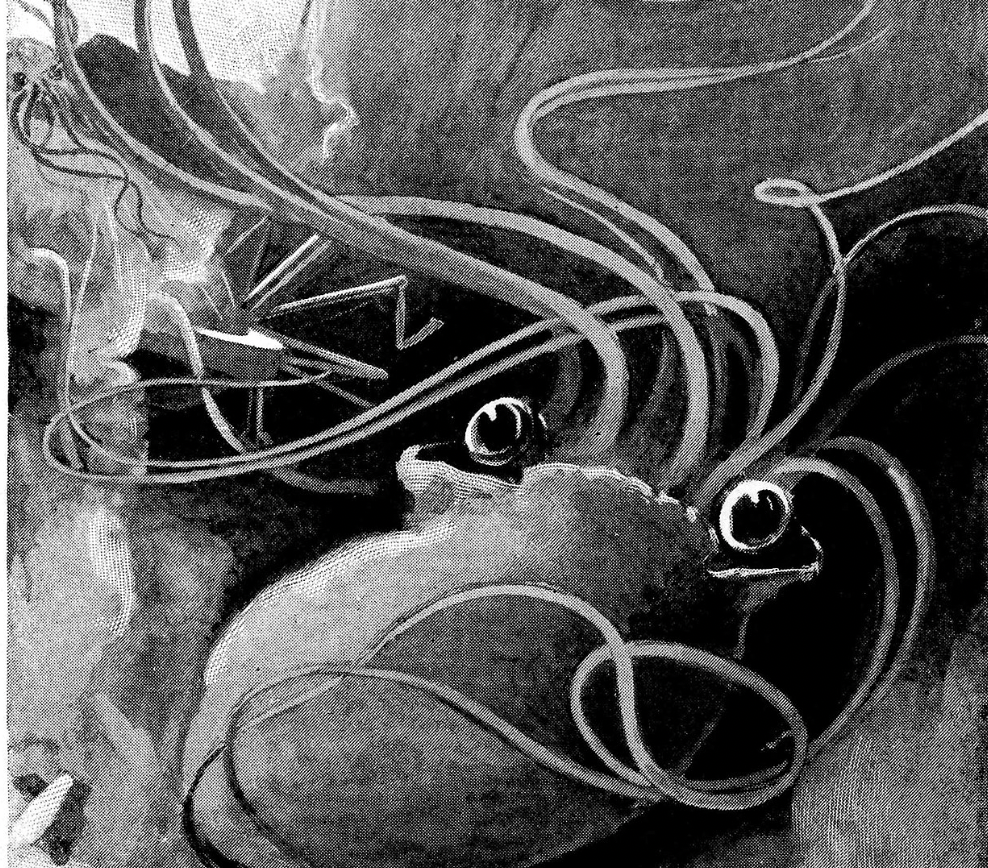
The Martian itself (Warwick Goble 1897)
Show the risks of technological development
One thing often forgotten about the Victorian era is that it preceded the First World War and, in many ways, laid out the conditions for it.
The Industrial Revolution didn’t just change manufacturing and create lots of factories, it also industrialised weaponry so it could be mass produced and quickly developed: the machine gun was invented in 1884.
Wells’ knew it wouldn’t take long before science and technology created even more devastating forms of weaponry — and he wasn’t wrong. The first nuclear bombs, capable of incinerating entire cities like Well’s ‘invisible, inevitable’ heat rays (Book 1, Chapter 5), were dropped on Hiroshima and Nagasaki in 1945, just 47 years after The War of the Worlds was published.
Even the toxic Black Smoke the Martians unleash on humans in the novel has a historical precedent. Various chemical irritants and smoke based weapons were experimented with throughout the 19th century — the same chemicals used to manufacture dyes, fertilisers and more could be repurposed for warfare. Though the Hague Convention of 1899 actually attempted to ban the use of poisonous projectiles in warfare, this didn’t last. As those of you who’ve read Wilfred Owen’s poem ‘Dulce Et Decorum Est’ (1920) will know, mustard gas — like the ‘black and poisonous vapour’ (Book 1, Chapter 14) discharged by the Martians in Wells’ novel — was deployed against enlisted soldiers.
In this way, Wells’ novel can be read as a form of literary prophecy that predicts oncoming, significant wars resulting from the conditions of nineteenth century England — just look at the novel’s title.
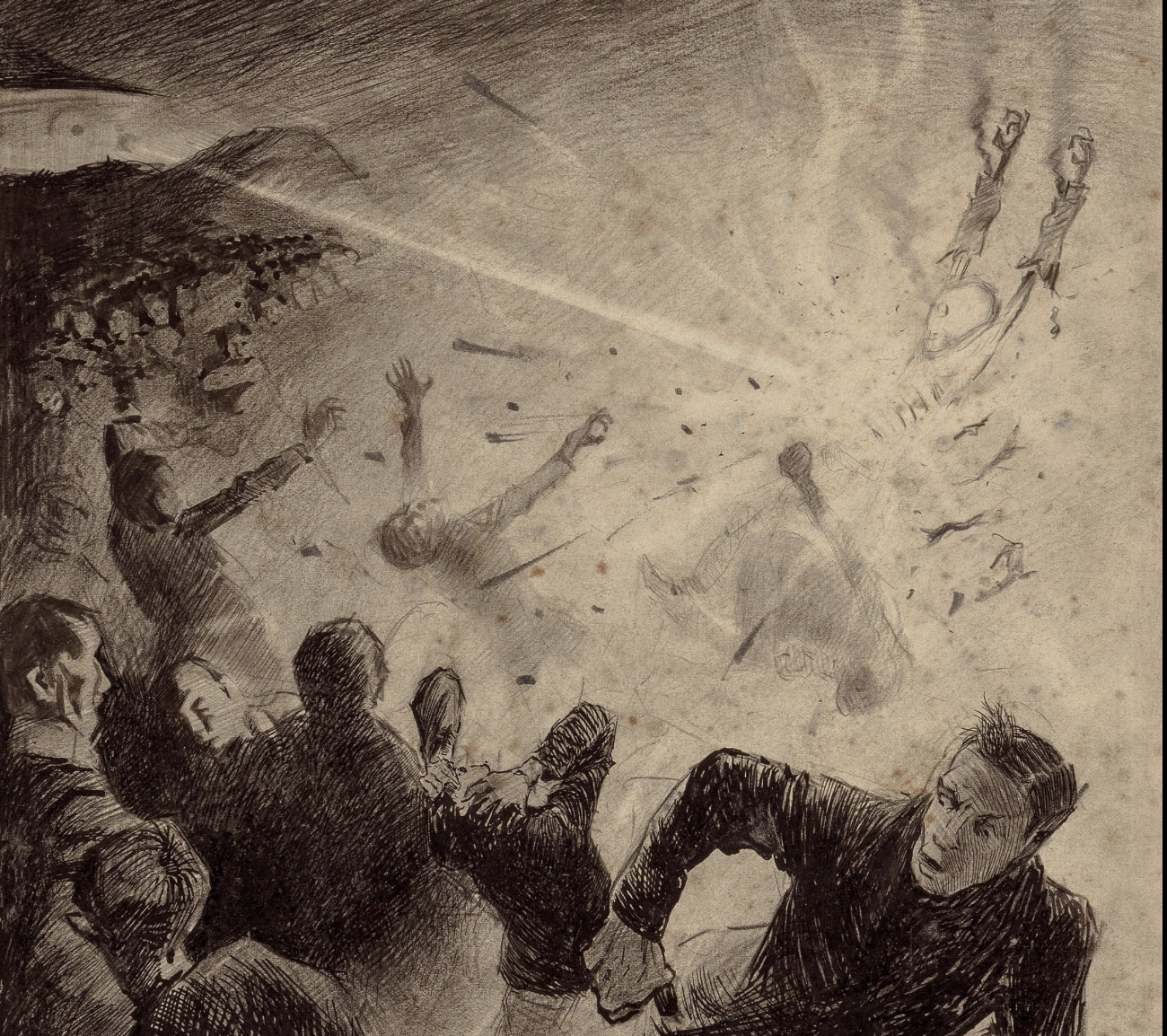
The Martians turn the heat ray on the crowds gathered near the pit, bringing "flaming death" (Henrique Alvim Corrêa 1906)
Criticise organised religion
Though raised by a highly religious mother, Wells doubted Christianity even in his youth — a doubt that grew when he studied under Thomas Henry Huxley (grandfather of another famous science fiction writer, Aldous Huxley). Thomas Henry Huxley was a great believer in Darwin’s theory of evolution and the man who coined the term ‘agnostic’, which means someone who thinks God’s existence is uncertain and unknowable.
To understand what it was about religion Wells disagreed with, look at how the narrator and the curate are contrasted in moments of crisis. The narrator, a scientist, focuses on survival so he ‘divided the food’ they had ‘into rations’ . The curate (arguably selfishly and consumptively) made an attempt to ‘get at the food’, ‘weeping and complaining of his immediate hunger’ (Book 2, Chapter 4).
A few chapters before, the narrator journeys on without the curate, but the curate latches onto him for safety: ‘the curate I left in the shed, but he came hurrying after me’ (Book 2, Chapter 1).
Read symbolically, their relationship is one of religion’s dependence on, even interference with, scientific progress.
Religion, as it’s embodied by the Curate at least, isn’t something that answers the world’s ethical and existential questions as it claims to, but instead ‘collapses under calamity’. The curate’s lengthy, apocalyptic monologues parody religious preachers’ sometimes hyperbolic speeches to show how religion gives humanity little autonomy in crisis as everything is accepted as the will of God: ‘the end! The great and terrible day of the Lord! When men shall call upon the mountains and the rocks to fall upon them and hide them — hide them from the face of Him that sitteth upon the throne!’ (Book 1, Chapter 13).
The curate’s assumption that the Martian invasion is the Biblical apocalypse foretold in the book of Revelation also implies another of Wells’ criticisms of organised religion: how it places humanity in the centre of the universe and assumes everything that happens has been orchestrated to teach humanity a lesson.
He calls the Martians ‘God’s ministers’ (Book 1, Chapter 13) — completely misunderstanding not only why the Martians appeared, but assuming humanity’s importance even when the Martian invasion reveals humanity and earth is just a speck of dust, floating in a universe of sometimes superior species.
Those are some key purposes of Wells’ novel!
I can guarantee that, whatever essay question you’re set, you can use some of this information: that’s why knowing a writer’s intention is so powerful.
If you’d like some support understanding Wells’ novel at grade 7, 8 and 9, get in touch.
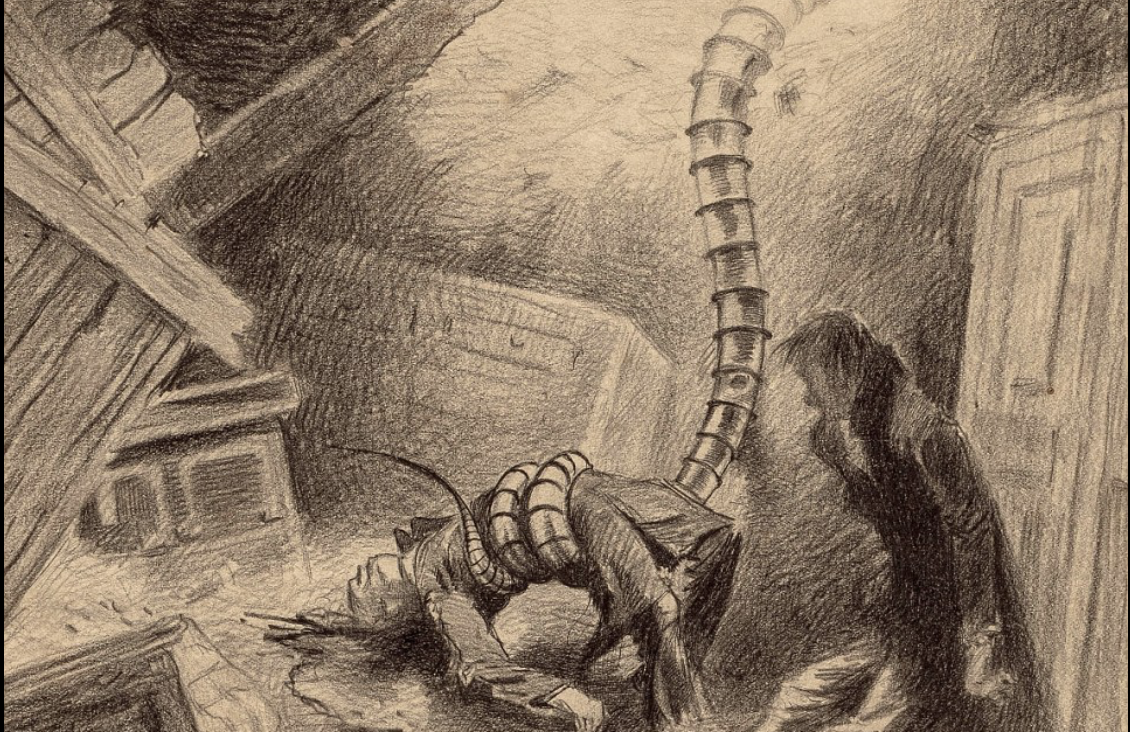
Martians grab the curate with a mechanical tentacle (Henrique Alvim Corrêa 1906)