Simon in Lord of the Flies: Grade 9 Analysis
Simon is one of the most difficult characters to write about in Golding’s Lord of the Flies (1954). But he’s also one of the most interesting.
While you might be clear on how Golding presents Simon as a Christ-like figure, you must also understand why he’s presented in this way to secure top marks.
Simon’s story mirrors Jesus’s — but what’s more important is how it diverges from it.
Relevant for AQA and Edexcel GCSE English Literature students.
Simon’s relationship with nature: a sign of unfallen innocence?
3 contrasting responses to the ‘candle buds’
Every character in Lord of the Flies interacts with the nature on the island in some way, but none engage with nature as deeply as Simon.
A great example of this is when Jack, Ralph and Simon examine the ‘bushes’ with ‘many buds’ they come across in Chapter 1.
Jack’s response, as Golding’s representation of humanity’s primitive urges, is to ‘slash at one with his knife’, then reject the buds since he ‘can’t eat them’. For him, nature will become something to be hunted for pleasure, to gratify primal appetites for food, blood and (symbolically) sex (think of the hunt of the mother pig in Chapter 8).
Ralph’s response, as Golding’s representation of a democratic, rational leader, is to consider the buds’ utility, wondering whether or not the boys’ can use them in the micro-civilisation he tries to create on the island. He claims that the buds ‘just look like candles’, ‘you couldn’t light them’. For Ralph, nature becomes a tool relied on to build a civil society (think of how the conch is used as a tool for democracy, for example).
Simon’s interaction with the ‘buds’ is different. Instead of thinking about how he can use the buds, Simon observes that they look like ‘candles. Candle bushes. Candle buds’, this comparison implying Simon sees a church-like beauty in them.
This is the start of a bigger plot where Simon’s experience of nature on the island seems to have a mystical, religious depth, setting him apart from every other character in the novel.
Simon’s relationship with nature mirrors Adam and Eve’s
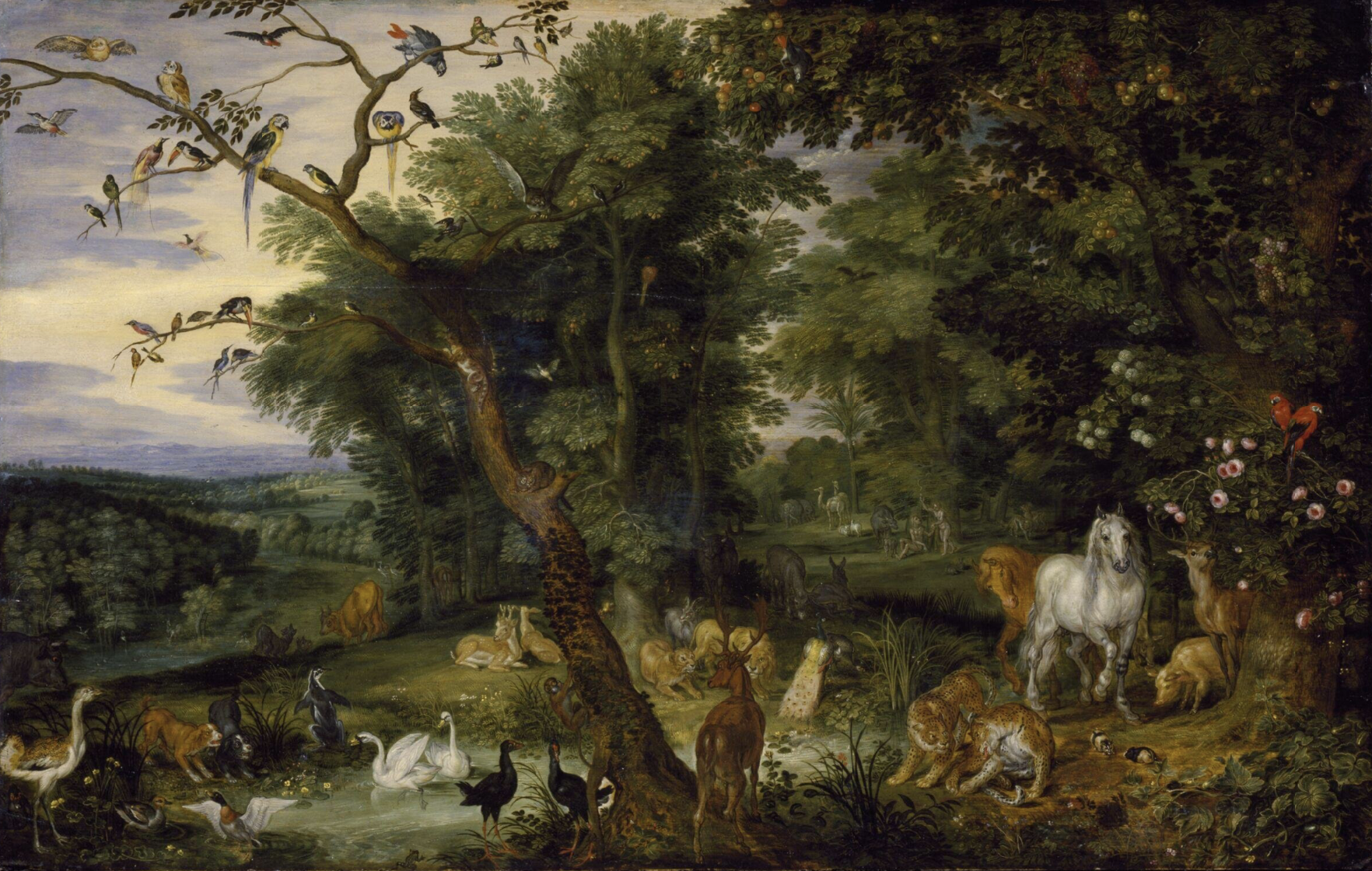
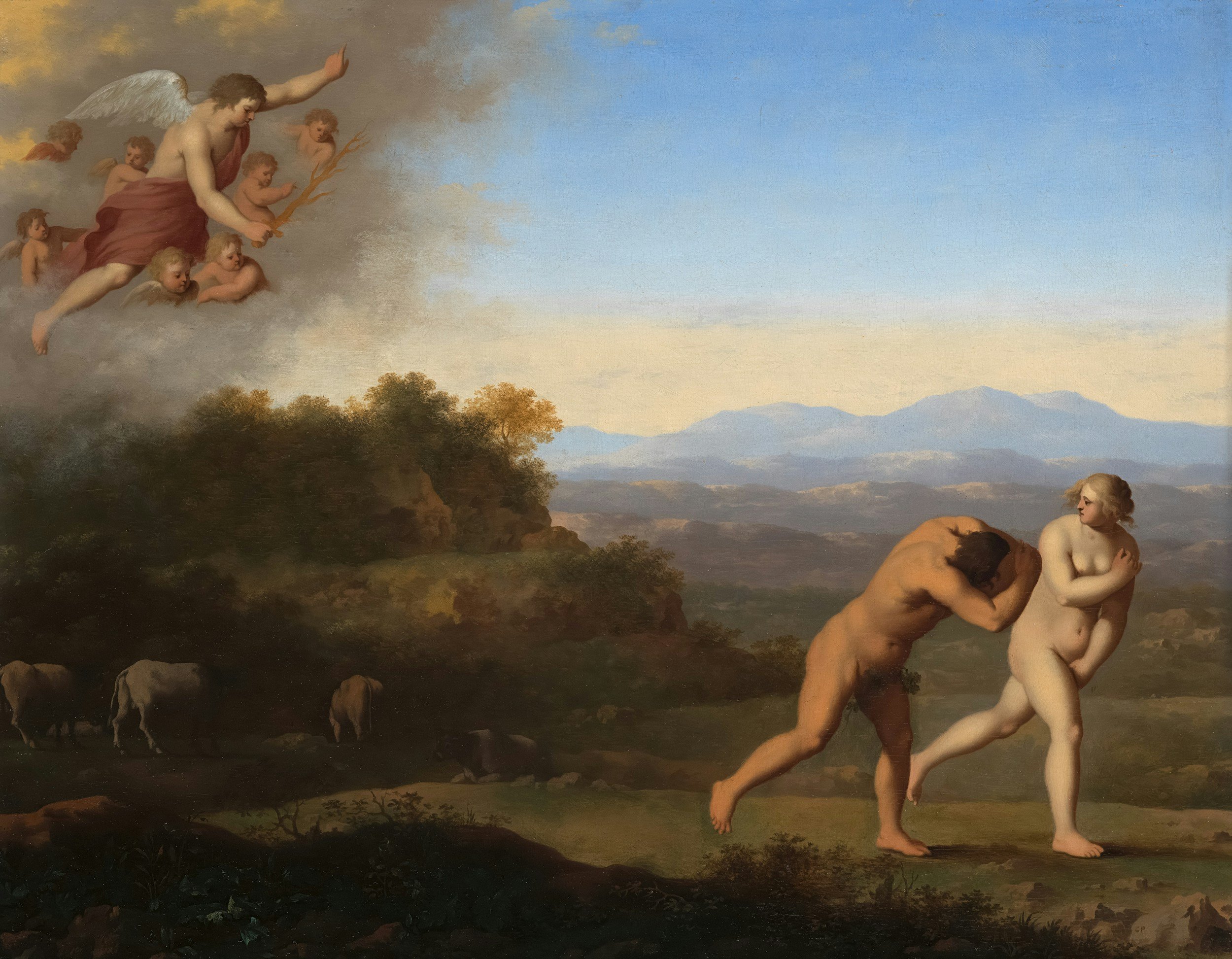
Simon’s interactions with nature recall Adam and Eve’s in the Garden of Eden, before being expelled from this paradise for eating the forbidden fruit (an event called the Fall of Mankind).
Here’s a bit of background knowledge that could transform your understanding of the novel (also helpful for understanding Jekyll and Hyde and Frankenstein if you’re studying those!):
The Fall is believed to have huge consequences in Christian theology, bringing sin, death, and evil into a world that was, prior to it, completely pure. The Fall even altered nature so that it changed from harmless and paradise-like (as in Eden) to harmful. Once this paradise was lost, humanity had to contend with infertile lands, thorns and thistles, and extreme weather.
Before the Fall, Adam and Eve were also pure, innocent, and completely free of sin — just as God created them. This purity was reflected by their relationship with the natural world, so that, upon seeing nature, their minds were struck by wonder for its marvels. They didn’t think about harming nature or submitting it to their will. Instead, they appreciated nature’s glory, which turned their minds back to the glorious God who created it.
Now let’s get back to Lord of the Flies: Simon’s experience of nature on the island — seeing a wonderful depth in it that no other characters can — therefore allows Golding to present Simon as so pure he’s like the unfallen Adam and Eve.
Nature returns to a pre-fallen state when around Simon, becoming a paradise of beautiful delights. Consider when Simon watches as the ‘candle buds’ almost magically ‘opened their wide white flowers’ in response to the ‘light that pricked down from the first stars’, or when he s granted with ‘double handfuls’ the ‘choicest fruit’ to share with the littluns (Chapter 3).
On the island, Simon recovers a little Eden: nature rewards his purity with a paradisiacal abundance.
Golding’s message through Simon’s relationship with nature seems to be that if humanity interacts with nature with unfallen innocence, it will give humanity what they need to thrive.
But in the bleak world of Lord of the Flies, even Simon’s innocence and purity seems to have its limits.
Read on to learn how Golding uses Simon to show even Edenic innocence is not enough to save the humanity from ‘the darkness of man’s heart’ (Chapter 12).
Simon’s death subverts Christ’s redemption: can anything save mankind from their evil?
How Simon’s story is similar to Christ’s: miracles, crucifixion, ascension
Just as Simon is paralleled with the unfallen Adam and Eve, he is also paralleled with Christ.
To understand why Golding parallels Simon with Christ, you must understand Christ’s significance in Christianity — something which is helpful to know for A Christmas Carol and Dr Jekyll and Mr Hyde too.
As you may already know, Christians believe Jesus was the son of God, capable of miracles, and completely pure and sinless, though still crucified like a criminal. After his crucifixion, Jesus came back from the dead (called the Resurrection), and went up to heaven (called the Ascension).
Just based on this information alone, you can start picking out the similarities between Jesus and Simon’s narratives:
Like Jesus who fed five thousand of his followers with only ‘five barley loaves and two small fishes’ (John 6:9, KJV), Simon is also presented as miraculously filling the littluns’ ‘endless, outstretched hands’ with ‘fruit’, only leaving when they’re ‘satisfied’, conveying a Christ-like infinite, boundless generosity that can even satisfy an ‘endless’ need (Chapter 3).
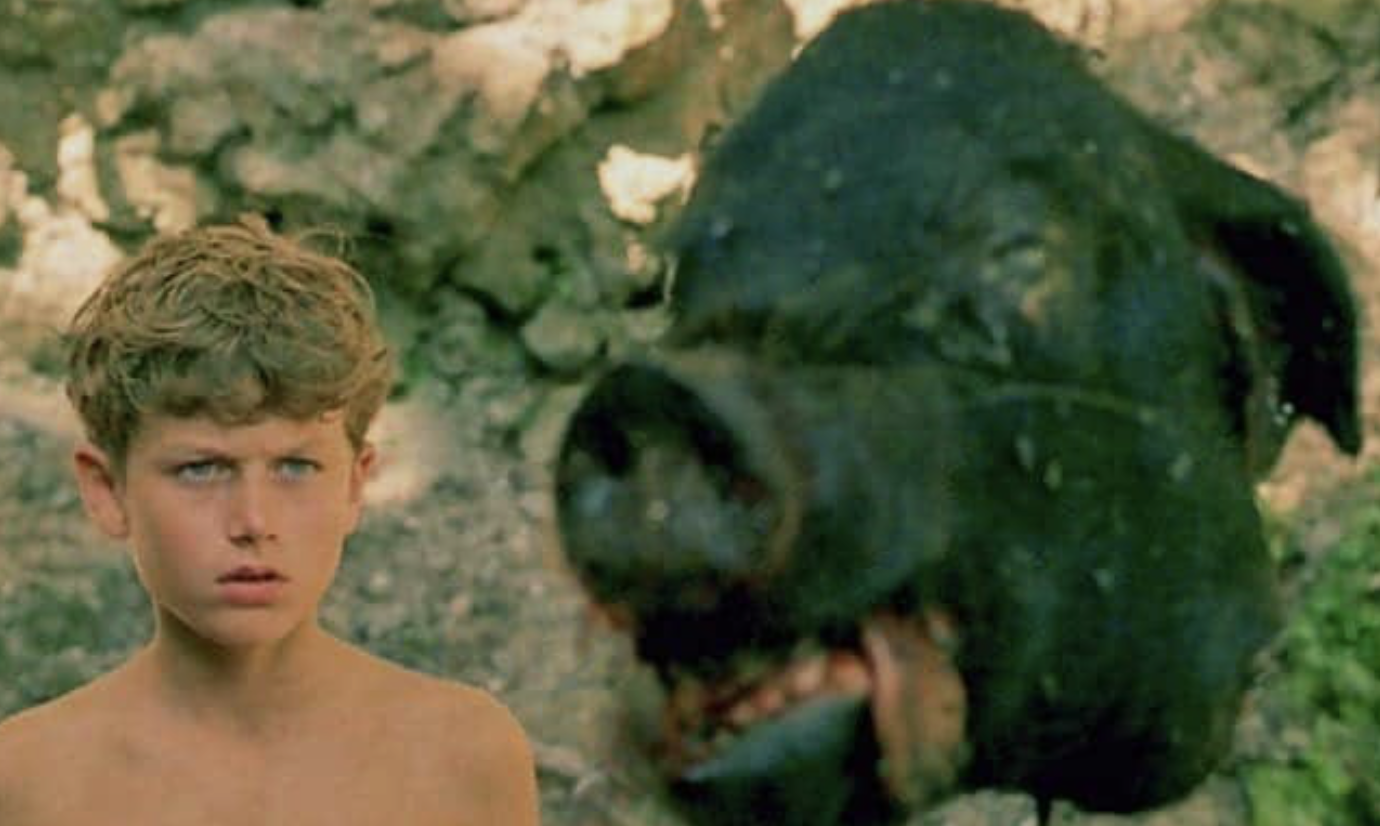
Like Jesus who went ‘into the wilderness to be tempted of the devil’ (Matthew 4:1, KJV), it is Simon who directly speaks with the pig head on a stick, ‘the Lord of the Flies’, (an English translation of ‘Beelzebub’, a Hebrew name for the devil), that serves as Golding’s symbol for the problem of evil in humanity: ‘I’m part of you’, ‘I’m the reason it’s no go’, ‘why things are what they are’ (Chapter 8).
Most strikingly, like Jesus was crucified on the cross and treated as a criminal in spite of being the only sinless person, it is Simon, by far Golding’s purest character, who is mistaken for the Beast when he’s killed in a murderous frenzy (‘Kill the beast! Cut his throat! Spill his blood! [Chapter 9]). This creates the same cruel irony as in Jesus’s death, where sinners perceive evil in the sinless.
The parallel between Jesus and Simon even continues after Simon’s death. Like Jesus returns to heaven in the Ascension (‘he was taken up; and a cloud received him out there sight’ [Acts 1:9 KJV]), Simon is transfigured into something heavenly by the sea that picks up his ‘broken body’ from the beach.
The water changes Simon’s body so his ‘cheek silvered and the turn of his shoulder became sculptured marble’ — as if he’s now made of the precious, enduring materials used to make statues and effigies of religious martyrs.
Phosphorescent organisms, described as ‘moonbeam bodied creatures with fiery eyes’ and ‘trailing vapours’ ‘busied themselves around his head’ and ‘dressed Simon’s coarse hair with brightness’ (Chapter 9), giving Simon a bright halo signifying divinity.
Even the phosphorescent creatures who take him away are described as if heavenly beings. Their ‘moonbeam’ bodies, ‘fiery eyes’ and ‘trailing vapours’ suggest the ethereal immateriality of angels, believed to be made from bright, intangible and otherworldly substances comparable to moonlight, fire, and vapour.
All of this suggests Simon’s death is a return to a purer realm — just like Jesus returns to heaven.
How Simon’s story is different to Christ’s: no salvation and legacy
But what’s more important (and perhaps more interesting) than the similarities between Simon and Jesus’s is narratives are the differences between them — that’s what will really help you unpick how Golding uses the story of Christ for his own intentions as a writer.
This is a great thing to ask yourself when you spot allusions to other works in your set texts.
Authors rarely aim to just repeat the stories they know. Their goal is to do something with these stories, to flip them upside down and turn them inside out, creating something fresh and unique for their own purposes.
So, how does Golding change Jesus’s story in Lord of the Flies?
I’d argue by twisting the legacy of Simon, his version of Jesus.
The most important thing about Jesus is that his death cleanses mankind of sin. It’s why Christians believe he came down from heaven in the first place. In Christian belief, sin is a bad behaviour that also results in punishment, just like breaking a law today incurs a penalty. The logic is that given humanity is sinful, they deserve to be punished by going to Hell instead of Heaven.
That’s where Christians believe Jesus stepped in. He took the punishment instead. Despite being completely sinless himself and having no penalties to pay for, Jesus chose to suffer and die on the cross so that humanity didn’t have to suffer for their sins.
The penalty was met. Humanity was forgiven.
Mankind was saved from being fated to Hell.
So Christ’s legacy is believed to be salvational and redemptive. Christians believe his death ultimately had a positive impact, taking mankind to a better future.
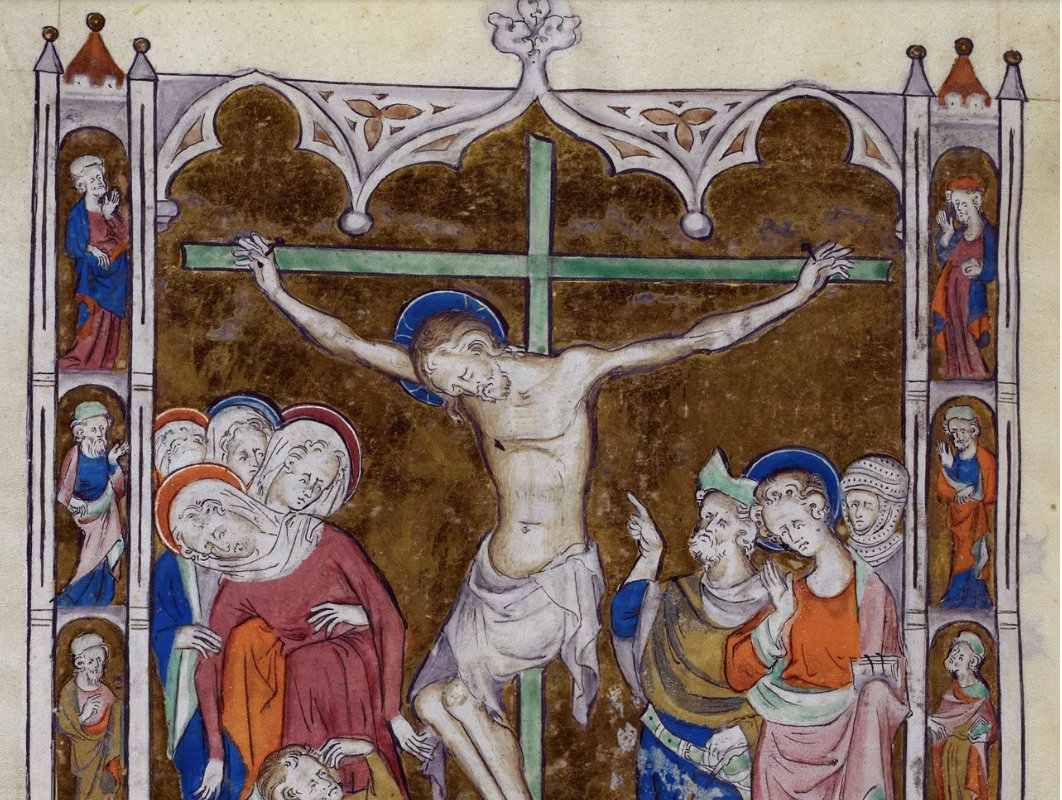
But is that what happens after Simon dies in Lord of the Flies?
No, not at all. Things only get worse.
Jack’s power grows.
He and his followers completely lose their humanity.
By last chapter, all of the boys (except Ralph, Sam and Eric) are referred to as ‘savages’, their ties to civilisation lost to their inner Beast. Even the island at the novel’s end resembles a desolate hellscape, ‘scorched up’ (Chapter 12) by the flames used to flush Ralph out of hiding.
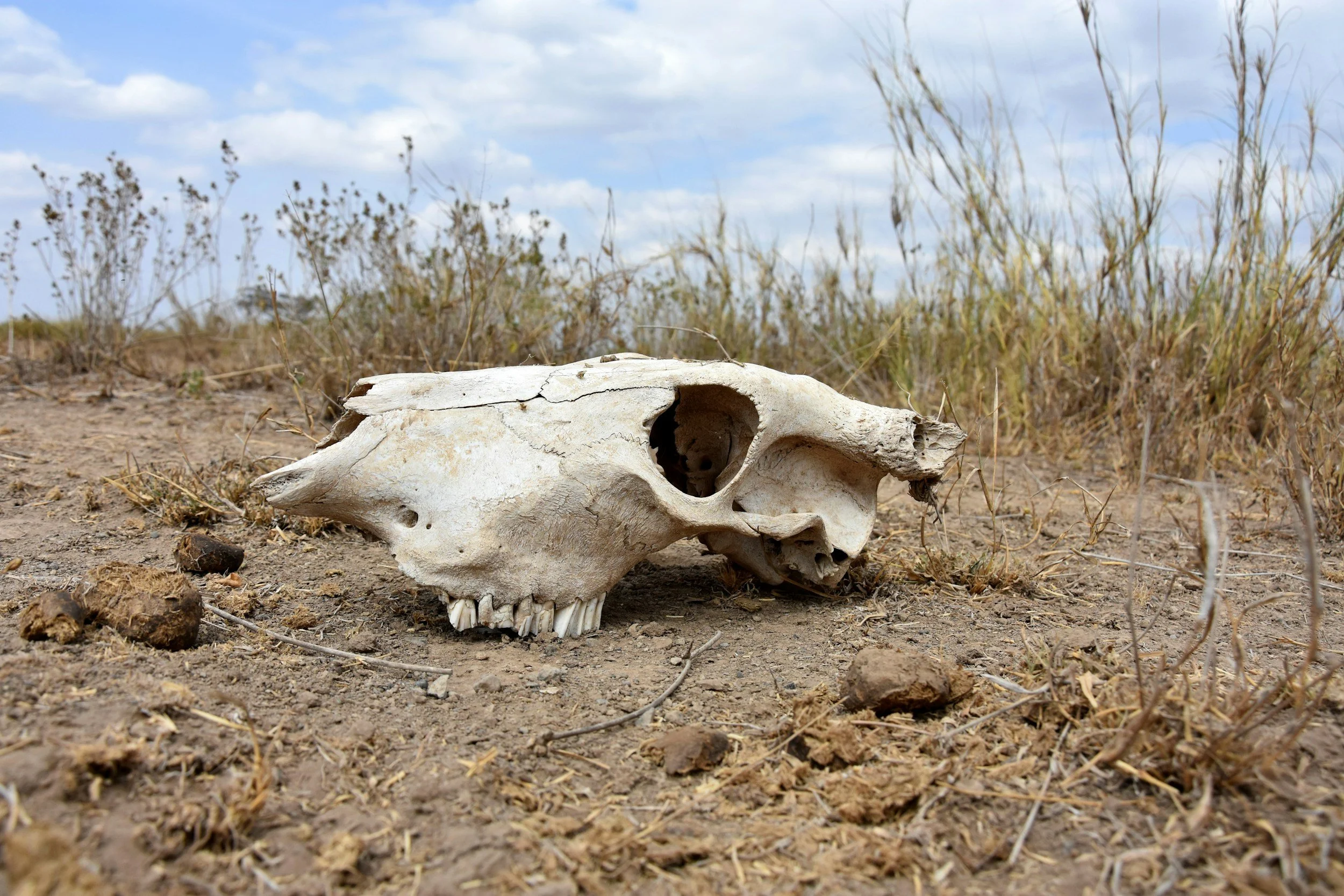
Golding symbolises the boys’ continual moral decay with the continually rotting pig head or the Lord of the Flies. By the final chapter, it’s just a ‘pig skull’, all its flesh decomposed so that it ‘gleamed white’, bare, mirroring how ‘mankind’s essential illness’ (Chapter 5) seems to completely wipe out the boys’ humanity.
The phrase ‘essential illness’, which closely echoes the Christian idea of original sin resulting from Adam and Eve’s first disobedience in Eden, proves that Simon and Jesus’s legacies couldn’t be more different.
Far from cleansing the island of the Beast and sin, their influence continues to grow after Simon’s death.
And whereas Jesus’s sacrifice is remembered by Christians today, his words worshipped as gospel truth, the holy word of God, Simon’s crucial realisation that the Beast is ‘only us’ (Chapter 9) falls on deaf ears — no one but the reader hears him, let alone understands what he means.
After his death, Simon is rarely discussed, and otherwise ethical characters like Piggy partake in erasing his legacy by rationalising his death as an ‘accident’, even blaming him for it: ‘he was batty. He asked for it’ (Chapter 10).
Golding’s message is bleak. By subverting the parallel between Simon and Christ, Golding implies that even a Christ-like martyr cannot save society ‘the darkness of man’s heart’ (Chapter 12).
In Golding’s world, even a Christ-like sacrifice cannot redeem humanity of their inner evil.