‘Lament’ by Gillian Clarke: Grade 9 Notes
Exam ready notes, ready to drop into an exam so you’re fully prepared to ace a question on Gillian Clarke’s poem ‘Lament’.
Let’s get straight into the stuff you need to know on this highly versatile poem.
Relevant for OCR Conflict Poetry and Cambridge IGCSE students.
The poem’s purpose: why did Clarke write ‘Lament’?
Purpose is where to start with every poem, and why so many strong introductions consider a poem’s intention.
Not just what the poem says, but why it says it.
That’s also what all your essay paragraphs should start with (your point/ thesis statement/ topic sentence: what the writer shows and why).
In the case of ‘Lament’, the poem’s purpose is to encourage sympathy for all the victims of the Gulf War — human, animal, and even the entire earth — to show the devastating impacts of human conflict at large.
Don’t worry. You don’t need to know the political intricacies of the situation.
But the poem’s fiery imagery makes much more sense when you know that Iraq released millions of barrels of Kuwaiti oil into the Persian Gulf, leading to spreading fires and ecological destruction.
The poem’s form: what is a lament?
This poem’s title also handily tells you it’s form — the poem is a ‘Lament’!
Laments are an old form (they’re found in Ancient Greece and even in the Bible), so you can find laments through literature of all periods. They were often sung.
The defining feature of a lament through the ages is that it’s an outpouring of grief that is meant to be HEARD— not only mourning something privately, but demanding we bear witness to the suffering of others.
So as well as a way of coming to terms with terrible events, the lament form also insists that suffering doesn’t go unnoticed.
And that’s at the heart of Clarke’s poem. It is all about giving a voice to those who suffered in the Gulf War.
In the face of great tragedy, often witnessing the suffering of others is all we can do, but that is powerful.
So that’s exactly why Clarke uses the ancient form of the Lament for this modern conflict — so her reader bears witness its terrible impacts on human and animal life.
The poem’s structure: anaphora
Clarke’s anaphoric structure, repeating ‘for’ at the beginning of multiple lines, continually extends the addressees of her poem, moving from land, into the ‘sea’ and even across the entire ‘earth’.
This repetition reflects the wide scope of her conflict’s harms that also seems to continually extend, showing a conflict’s effects ripple out far beyond the battlefield.
But this anaphora also emphasises the immense power of Clarke’s poem, ceremonial or elegiac in how it stops to honour each and every thing hurt by the conflict.
The human cost: how does conflict hurt humanity?
“For Ahmed at the closed border”
Clarke’s reference to ‘Ahmed at the closed border’ lets her honour the struggles of refugees displaced by war.
Describing this person to be ‘at’ the ‘border ’creates pathos as he is so close to finding freedom in another nation. But he remains stuck in this liminal space on the cusp of security. Why?
The adjective ‘closed’ tells us. It raises the question of who shut the border, Clarke subtly criticising bordering nations for not supporting refugees in the crisis.
“For the soldier with his uniform of fire”
As well as fleeing refugees, Clarke also extends empathy for the people participating in the conflict where she mentions the ‘soldier with his uniform of fire’
‘Uniform of fire’ suggests the slow, painful deaths of soldiers in the Gulf War as they burned in the oil fires.
The fact this fire is metaphorically described as a ‘uniform’ is also significant: it implies the soldier’s whole body is covered with flames, replacing his clothing.
The burning away of uniforms symbolises how the horrors of war make nationalistic patriotism irrelevant (uniforms signifying national identity and pride)
“For the gunsmith and the armourer”
Even the people who make the weapons used to fight are shown sympathy in this lament.
As well as saying her poem is for the ‘armourer’ which conveys a sense of self-defence, Clarke dedicates her lament to the ‘gunsmith’.
This is potentially paradoxical: there would be less need for the armourer if there were no guns.
However, Clarke’s point appears to be that both are victims to the larger forces that trap them into war.
The animal cost: how is animal life entangled in human conflict?
“For the cormorant in his funeral silk”
Clarke’s description of the ‘cormorant in his funeral silk’ compares the slick of oil on its feathers to the cloth that covers dead bodies. Oil, coveted by humanity for wealth, means death for the animal life in this poem.
Some readers may see Clarke’s metaphor here as restoring dignity to the dead cormorant, presenting the oil that killed it as a black funeral shroud, a ritual used to honour those who’ve passed.
Other readers, however, would see the metaphor as painfully ironic: the cormorant was forced into an early death by human activity.
And instead of a ‘silk’ burial cloth — soft, light, luxurious — the bird is smothered in the sticky, heavy oil that killed it (there’s a large gap between the reality of this metaphor’s tenor and what it’s vehicle suggests). Therefore, the ‘funeral silk’ is more like a symbol of death itself, wrapped around the cormorant.
“For the hook-beaked turtles,/ the dugong and the dolphin”
Clarke creates a catalogue list of sea creatures: ‘hook-beaked turtles’, ‘dugong’, ‘dolphin’ and ‘whale’ to show how many different kinds of sea life were hurt during the war — she makes the variety clear to emphasise this devastation affected many species.
Clarke’s catalogue structure moves from smaller creatures like ‘turtles’ to a far larger species like the ‘whale’ to suggest the biggest and most powerful marine life was harmed by a war so destructive it rippled through entire marine ecosystems.
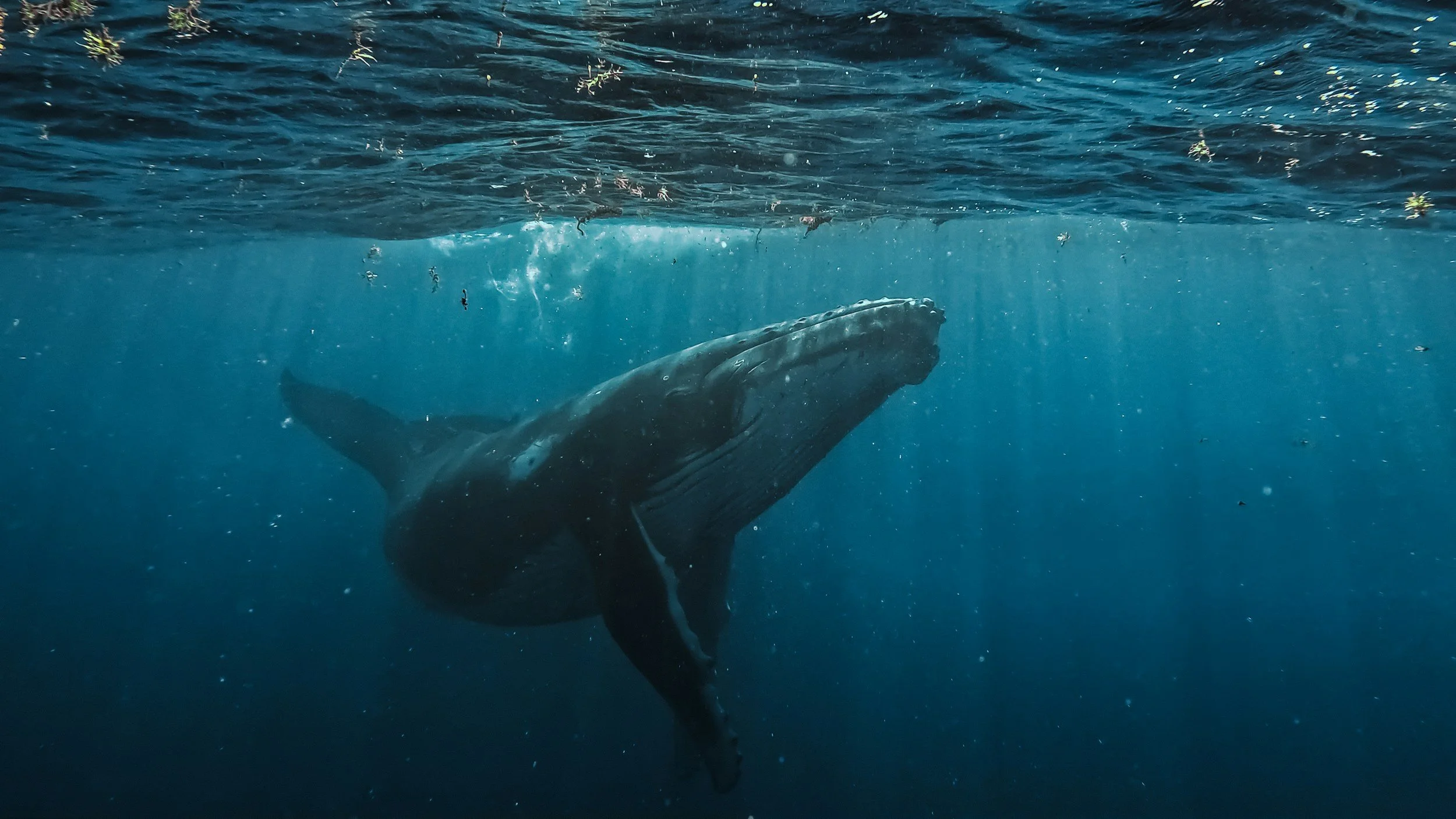
“The whale struck dumb”
Clarke’s description of the whale being ‘struck dumb’ implies that the whale — known for its haunting songs that spread across the seas, like the ocean’s own lament — is now silenced in shock (explaining why Clarke must write this lament instead).
The harsh monosyllables and plosives in ‘struck dumb’ evokes the sudden explosions of missiles in water.
This all suggests how the grief of animals affected by human activity is often unheard or even ignored by humans: we rarely discuss it. Clarke’s poem therefore seeks to grieve for these animals, so their deaths are not forgotten.
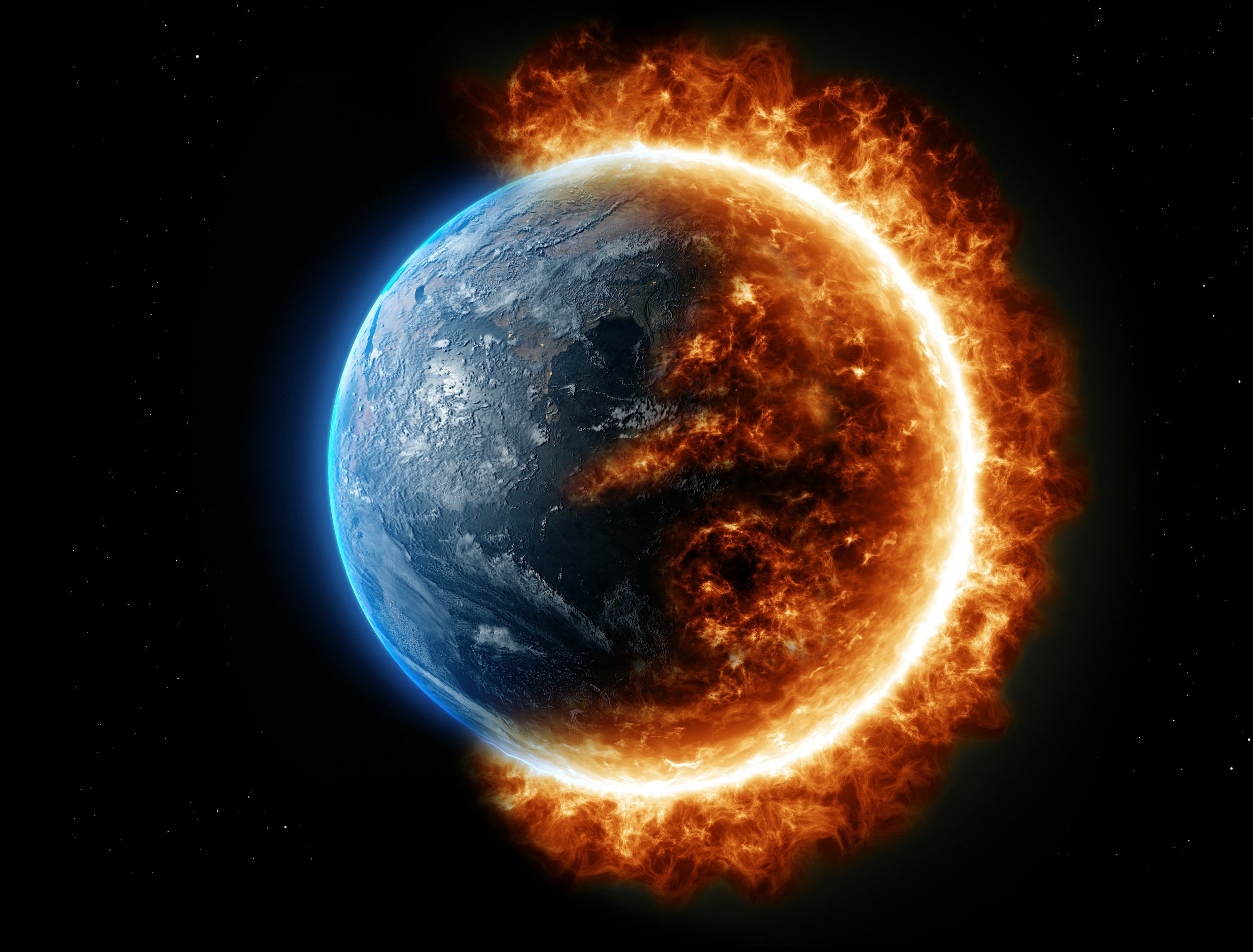
The future cost: a human-created apocalypse?
“The veiled sun”
The image of the ‘veiled sun’ suggests the impacts of the fires from land, with smoke blocking out the sun’s light, quite literally plunging the Persian Gulf into darkness.
“For the burnt earth and the sun put out”
However, Clarke’s descriptions imply these events are happening to the whole world, not just the Persian Gulf.
The word ‘earth’ is polysemic for the ground, scorched in the Gulf War’s fires, but also the planet, implying the whole earth is burning up.
The image of the ‘veiled sun’ also changes to the sun being ‘put out’ in the next line, as if it disappears from the solar system or is stamped out like a fire.
With these world-wide destruction connotations, Clarke’s poem leaves us with a grave warning: that humanity faces the risk of self-caused apocalypse. War and conflict poses existential threats to life on earth at large, not just in foreign nations or faraway places.
“For the ashes of language”
Clarke’s poem ends by reflecting on the ‘ashes of language’.
This implies that a major loss of the world ending will be losing language, a defining feature of humanity that allows for connection.
But more deeply, as shown by the horrors of the Gulf War that seemed permitted or ignored, this suffering has fallen on deaf on ears so that language (and with it human empathy) seems incinerated.
This reflects the broader purpose of Clarke’s lament: to ensure the world hears the suffering of all involved with the Gulf War so language, including her own, doesn’t lose its meaning.
For more OCR GCSE English Literature content, see these grade 9 notes on Femi’s striking poem about racial profiling, ‘Thirteen’.
And if you’d like lessons on GCSE English Literature poetry, get in touch.